Search Powered By Google

Category: Effects

  • Tech 21: The Undisputed Brand in the Guitar Effects World with their FlyRig5 lineups

    Tech 21: The Undisputed Brand in the Guitar Effects World with their FlyRig5 lineups

    When you think about brands that have truly changed the game in the world of guitar effects, Tech 21 is always in the conversation—if not leading it. Since the late ’80s, they’ve been delivering killer tones without the need for bulky amps or complicated setups. And their most recent hit? The Fly Rig series. These compact, all-in-one units are a dream for guitarists who want tone, portability, and reliability in one sleek package.

    What Makes the Fly Rig So Special?
    Let’s be real—lugging a full pedalboard around can be a pain. That’s where the Fly Rig shines. Imagine a powerful rig that fits in your gig bag. Each Fly Rig includes key effects like overdrive, delay, reverb, and modulation, all built around the legendary SansAmp analog amp simulator that put Tech 21 on the map.

    Let’s check some of them

    Tech21 Fly Rig 5 Plexi multi effects pedal
    The original Fly Rig 5 was a hit right away. It gave you that crunchy Plexi-style drive, warm analog delay, a clean boost, and of course, the SansAmp. Players loved it because it was plug-and-play. No guesswork. No tone chasing. Just great sound, fast.

    The Tech 21 Fly Rig 5 Plexi is a compact powerhouse designed for guitarists who crave classic British amp tones without hauling a full rig. At the heart of this sleek unit is the Plexi-style overdrive, which delivers that iconic Marshall-style crunch—rich, responsive, and full of character. Combined with the legendary SansAmp analog amp simulator, built-in delay with tap tempo, and a clean boost, the Fly Rig 5 Plexi offers a complete, gig-ready setup in one pedal. It’s perfect for players who want vintage rock tones in a lightweight, travel-friendly format.

    Tech21 Fly Rig 5 Cali multi effects pedal
    The Tech 21 Fly Rig 5 Cali is built for players who love the bold, high-gain tones of classic West Coast American amps, especially the modern punch of California-style boutique heads like the Mesa/Boogie Dual Rectifier.

    Check this Tech21 California Character Series Preamp Pedal video and catch the glimps of FlyRig Cali

    Tech21 California Character Series Preamp Pedal

    Featuring the SansAmp Cali preamp section, it delivers tight, aggressive distortion with plenty of articulation—perfect for metal, hard rock, and modern blues.

    With an onboard Boost, lush Delay with tap tempo, and analog signal path, the Fly Rig 5 Cali offers massive sound in a slim, tour-ready format. It’s a go-to choice for guitarists who crave versatile American high-gain tones without the bulk.

    Tech21 Fly Rig 5 Brit multi effects
    The Tech 21 Fly Rig 5 Brit is designed for guitarists who crave the legendary tones of classic British amps—specifically those gritty, harmonically rich sounds associated with vintage Vox and Marshall stacks. Built around the SansAmp “Brit” preamp section, this compact rig nails those chimey cleans and crunchy overdrives with remarkable warmth and clarity.

    Alongside its signature Brit-style gain, the Fly Rig 5 Brit features a powerful boost section, lush delay with tap tempo, and a robust analog signal path for authentic, amp-like response. It’s perfect for players who want British-flavored tones in a road-ready, all-in-one pedal.

    Artist Models and V2 Upgrades
    Tech 21 didn’t stop there. They teamed up with pro players to create custom versions. The RK5 Fly Rig (Richie Kotzen’s signature model) added a gnarly fuzz-style distortion, a tuner, and some slick tone tweaks. If you’re into heavier stuff, the Paul Landers PL1 Fly Rig has a tight, focused gain section perfect for metal and industrial tones.

    Then came the Fly Rig 5 v2
    The Tech 21 Fly Rig 5 v2 is an upgraded version of the original best-selling Fly Rig, offering even more versatility and tone-shaping control in the same ultra-compact format. Centered around the legendary SansAmp analog preamp, the v2 adds an independent reverb section, an enhanced delay with tap tempo, and a more refined Plexi-style overdrive for classic British tones. New features like a switchable clean channel, FX loop, and XLR output with ground lift make it more stage- and studio-friendly than ever. Whether you’re gigging, recording, or practicing, the Fly Rig 5 v2 delivers pro-level tone in a grab-and-go pedal.

    Overall it’s an improved version on the original with more control, better speaker simulation, and even more flexible routing options. Basically, they took a great pedal and made it even better.

    Why It’s Perfect for Modern Guitarists
    Whether you’re touring the world, playing local gigs, or recording at home, the Fly Rig just works. It’s especially great for fly dates where space is tight, or when you need a reliable backup in case your main board fails. And yeah, you can totally record with it—just plug it straight into your interface and enjoy that rich, analog warmth.

    blank
    blank

    The analog design also sets it apart from the sea of digital multi-effects. The Fly Rig responds like a real amp and sounds organic, not sterile or overly processed. If you want pro-level tone without the pedalboard hassle, Tech 21’s Fly Rig series might be your new best friend. It’s one of the smartest tools out there for modern guitarists—and that’s why Tech 21 remains the undisputed brand in the guitar effects world
  • Fly Rig 5 BRIT guitar effects pedal by Tech 21

    Fly Rig 5 BRIT guitar effects pedal by Tech 21

    Here comes the BRIT version of the Fly Rig 5 by Tech21. It comes in violet theme, bright knobs and amazing sound. It has the simplicity design like the Flyrig 5 first version, but surely this BRIT has more of something than the first flyrig5 has.

    blank
    Tech 21 FlyRig 5BRIT

    The Design

    Looks cool isn’t it? for me the design is by so far the most catchy color, Still with the simple one input and one output, which sometimes we want more features on this pedal. yes, that urge to mix and match the pedals in order tor redefine our tones. it was answered by the last post anyway, about thee fly rig 5 version 2.

    The Sound

    what about the sound? yes.. by far it is amazing, Flyrig 5 Brit sounds like the plexi one, but with more rich gain. It is more versatile because with more gain, we have wider range of music genre, and Flyrig 5 brit sounds just great on clean setting. i made the shootout on youtube, here it is:

    Tech21 FlyRig 5 – BRIT on youtube

    so by far this is my favorite between all of the first version of fly rig 5. FYI for this Fly Rig stuff, i recorded them all directly through to mixer without any cabinet simulator whatsoever. just using DIbox to get stabilized signal only. The result was amazing. i can go to anywhere gig with this pedal, and since it’s soo small, i can carry it without any second thought. just put it into my guitar gigbag and we’re good to go. I can share no words more than these, let’s the sound speaks up by it self.

    blank
    Fly Rig 5 BRIT by tech21

    the latest fly rig is FLy Rig 5 V 2 , also check it out – go to post

  • pedal board Aluminium DIY for analog effect pedals

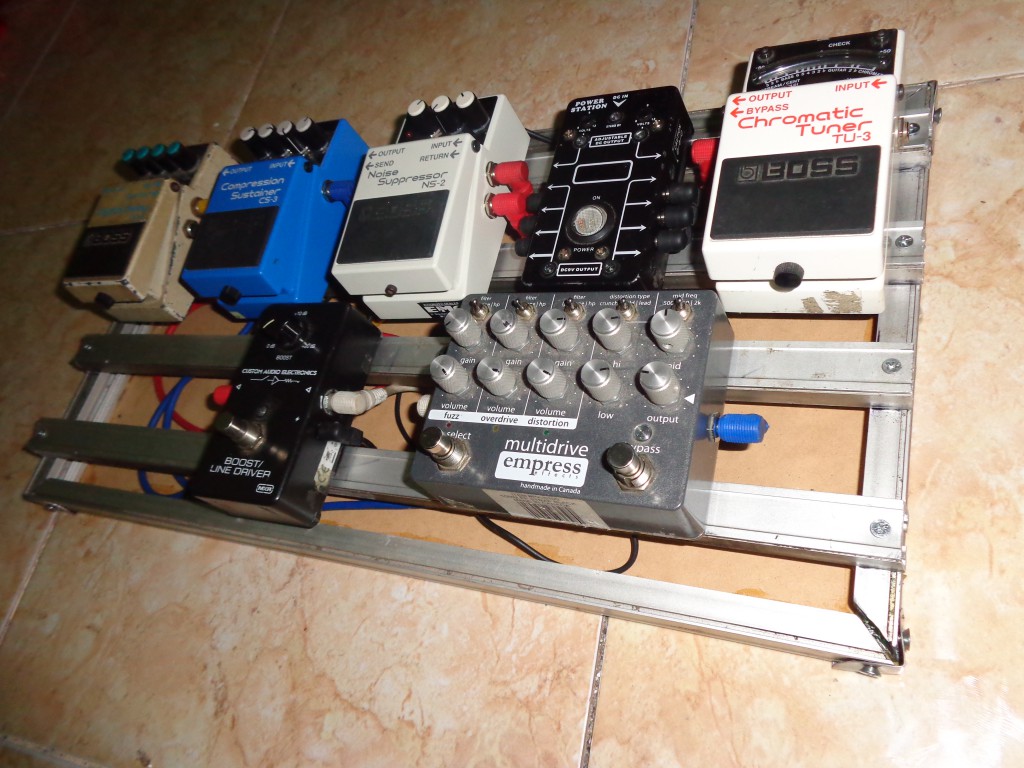
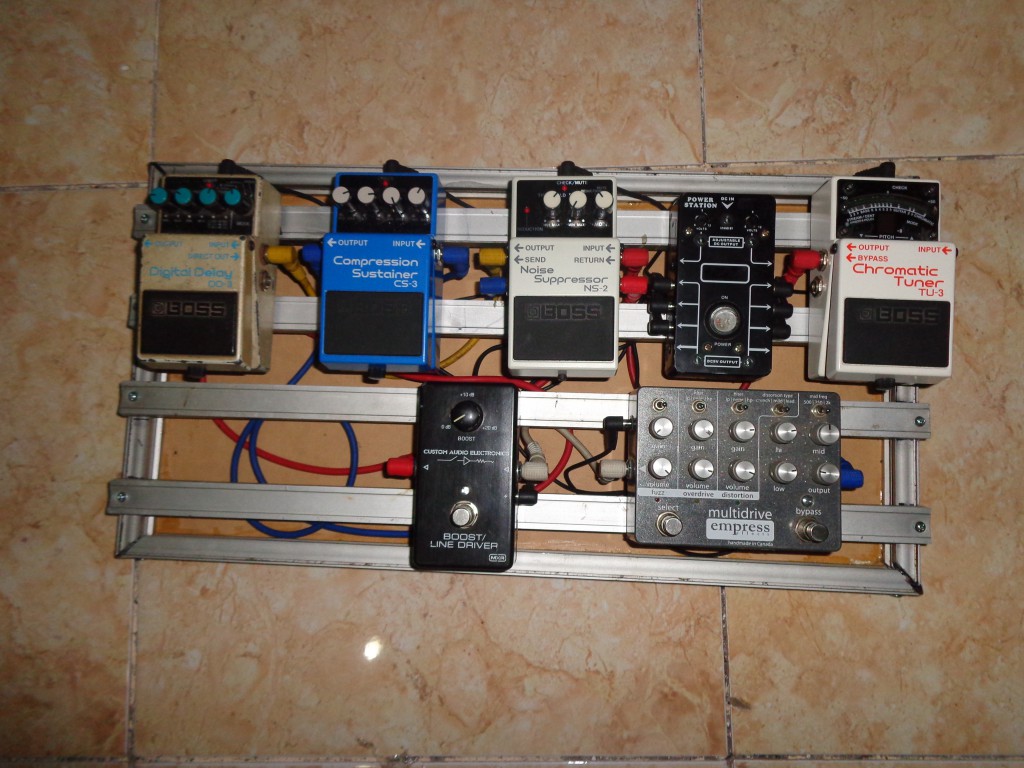
    So I’ve tried few DIY about guitar and this is my favorite, making pedal board for my analog effect pedals. why does it become favorite? because it’s easy! And i consider this will be everyone’s successful first try. I really forgot to taking pictures while i made the pedal board, I only can show the result and make a list for this DIY pedalboard.


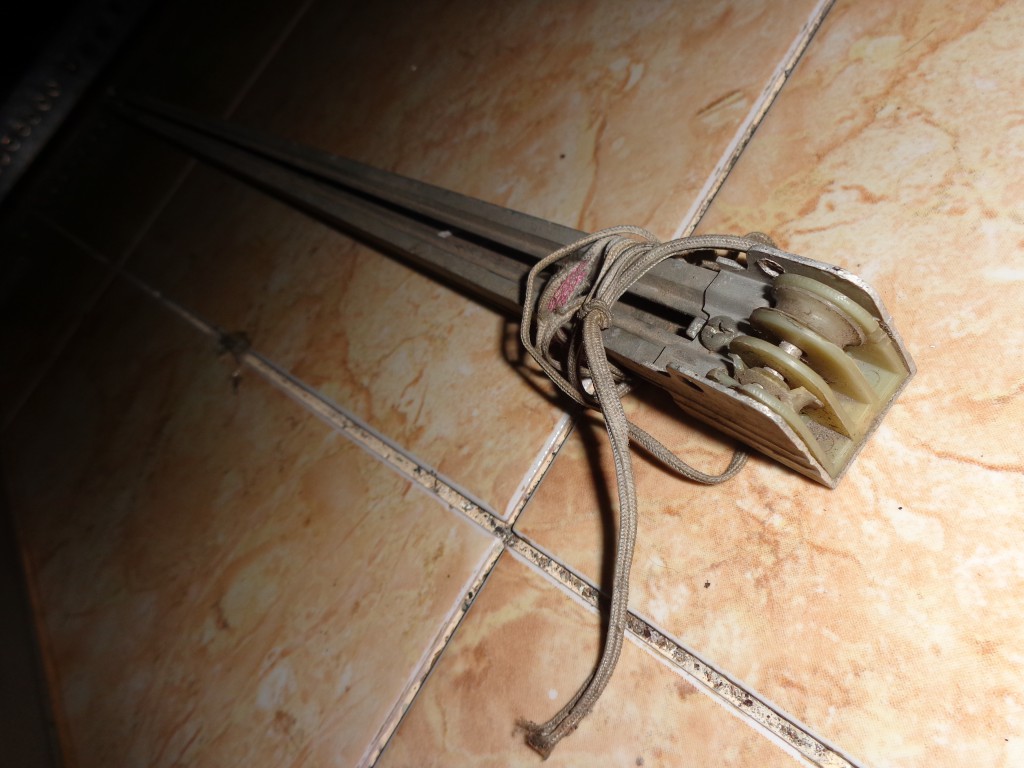
    First, I took the used aluminium bar on my warehouse, and yes, it was for curtains actually.

    DIY aluminium pedalboard

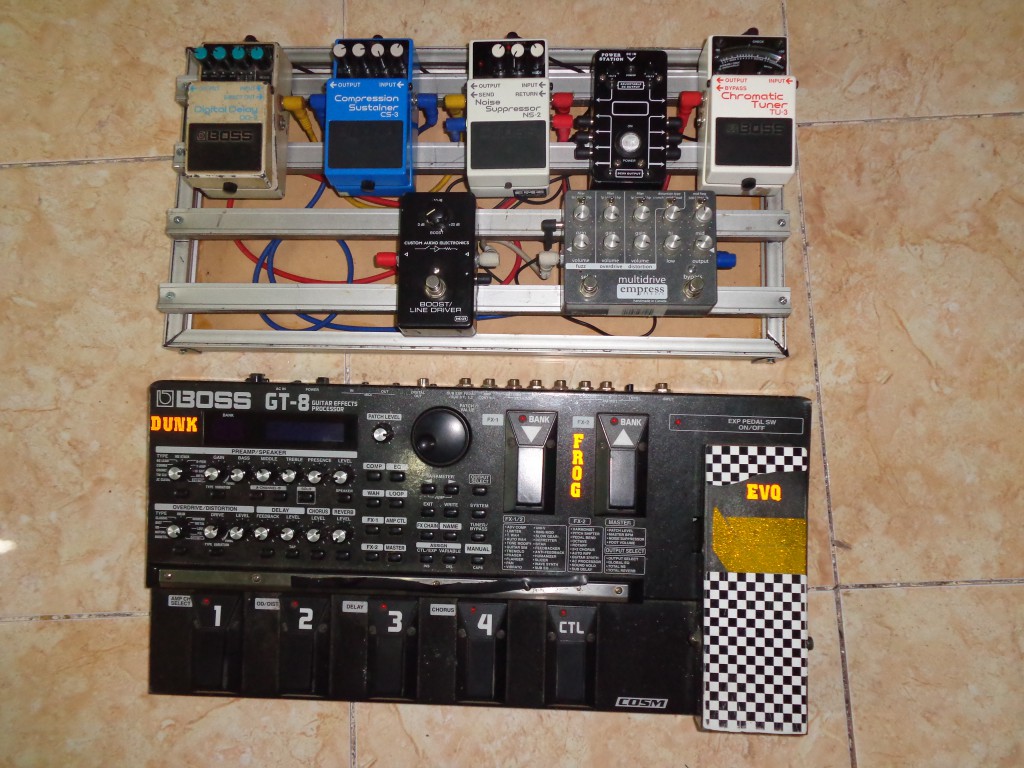
    and then I cut it into pieces. I didn’t have any idea about the size at first so i decided to use my Boss GT 8 dimension so i can put it in the GT 8 softcase.

    diy pedal board aluminum (1)
    Aluminium pedal board using Boss GT 8 size dimension


    well, it works. I use screws for joining the edges, using drill machine to make holes and it turns out okay.


    diy pedal board aluminum (3)
    Aluminium pedal board


    As you can see I’m not good at making things. this pedal board isn’t exactly precise, there are gaps between joints, BUT, the Aluminium bar is strong enough to keep my rough craftsmanship’s result in rigid condition.

    by the way, I put used paper board below the pedal board to cover the cables so they don’t come out and messy.

    I’m not using velcro, I’d prefer Double-Sided Bonding Tapes to put my pedals on the board. but if it’s not strong enough, I’ll replace the tapes with velcro or something else.


    diy pedal board aluminum (2)
    Aluminium pedal board


    right now while I’m watching my pedalboard, I have some tips for everyone:


    – For every DIY project, please take enough time to make blueprints. my first and fatal mistake is, I’m in hurry in preparing my stuff for next performance and I was just too excited about DIY things, in matter of fact, I’m always too excited about guitar things.

    – We can also use wood, but IMHO, aluminium is great material, considering it came from used stuff. you have to buy good wood for this, you just can’t pick any used wood. DIY project is great with all-new-bought stuff, but for me, recycling used stuff comes first.

    – you might wanna upgrade your cable connectors for your analog pedals. there is rumor about my cheap cable connectors reduces tone, and I’d like to read more about cables and put that topic in other posts

    – instead of making one, surely you can buy a pedalboard.. a Boss bcb-60 pedal board will satisfy your needs and it saves you a lot of time BUT >>>

    if you bought brand new pedal board, you will always be haunted by CURIOSITY, HAHAHAHA


  • Optimizing Digital Effect Processors in Live Performances

    So everybody goes to analog pedals these days. what happens with digital effect processors anyway? yet is there anything wrong with guitar digieffects? Actually this is phenomenal. when music business demands originality and unique sound characters, people start to think to achieve the unique guitar sound by using boutique pedals, or at least modded analog pedals besides getting various amps, speakers and recording methods. many sources said that digital effect processors tend to have “robotic sound” while to determine what is robotic sound by ears only is not easy.

    Well, frankly this is annoying. You come at stage and you hear people saying your digital effects processors aren’t good enough to achieve the optimal sound just because there’s saying about “robotic sound that digieffect tends to have”. even before they heard how you play guitar. it’s silly.

    but leave it be and trust your ears, your playing and you will hear your guitar learning results singing all the way. while here I’ll share you some ideas in optimizing your digital effect processors for live performances purpose.

    RULE (for every CONDITION that i will mention below):

    leave the equalizers inside digital effects processors Flat, so does for the amps

    By leaving the equalizer in flat position, you will hear the real sound of your guitar and you will know sound differences between your stratocaster and your lespaul, or hollow body and telecaster, superstrat and other guitar model. you can also get more sound definition by kinds of pickups. this is Very Important. by knowing this, you can determinate how overdrive and distortion works on guitar sound. how to flatten equalizers? we all know that’s the easy part. put all numbers in mid-position. if your equalizer has 0-100 range, put them all on 50 number’s value. at some points you might want to put all the treble, mid and bass on value 25. that’s what i do when I’m not sure about the gain and want more enhancements later. you can bypass the digieffects for sound comparison. for my setup, there’s almost no differences between the clean setup and the bypass sound except for the volume. i add some color later after this circumstance.

    now.let’s move on to the digital effects processor. Mostly digieffects have preamp modelling and this is our start in fulfilling our needs in guitar sound. if the thing is, You meet Amps on stage or/and you wanna use them as your guitar main sound preamp, that’s the main idea of this article.

    what you need to do is
    – turn the digieffect’s preamp modelling OFF.
    – decide your effects chains sequence.
    you want the amps as the first sequence of your effects chain, so:
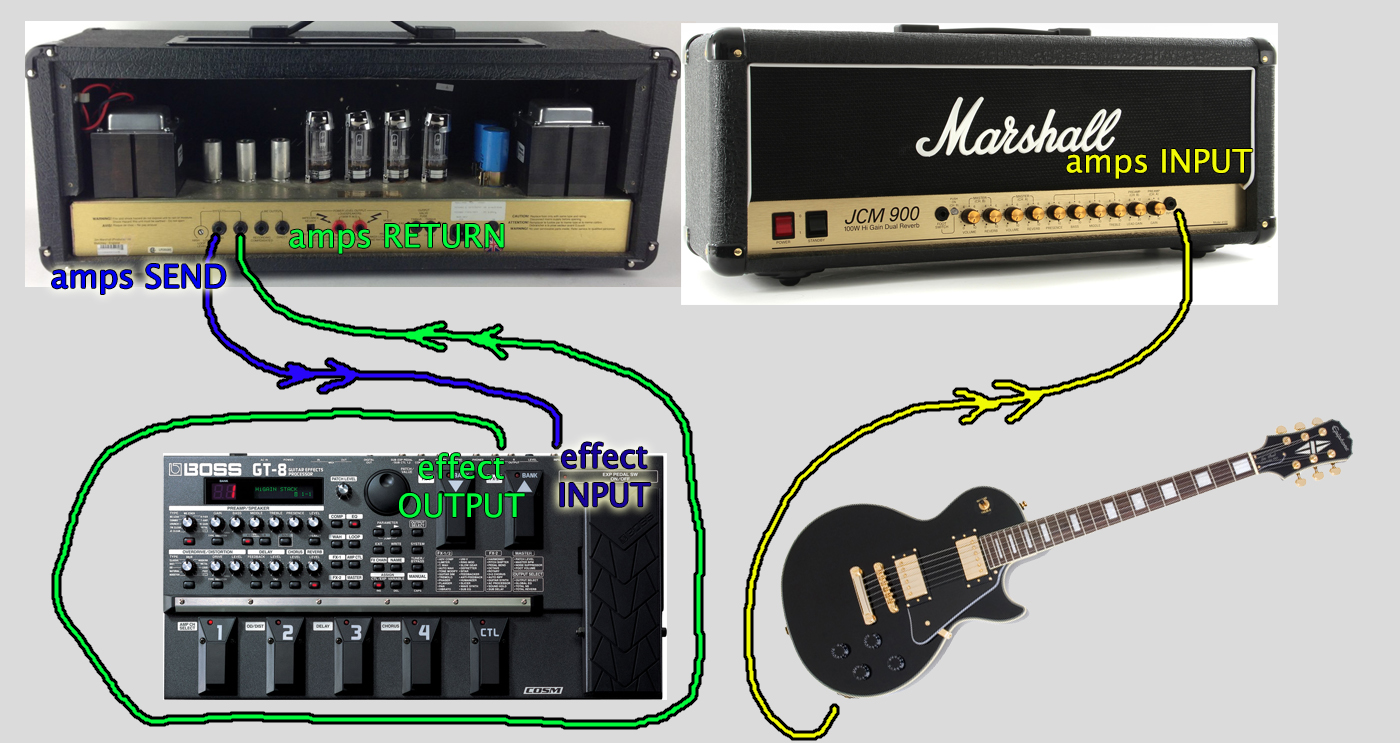
    1. you can plug your “digieffect guitar IN” into “amps SEND” and “digieffect guitar OUT” into “amps RETURN” (plug your guitar into “amps INPUT”)

    "digieffect guitar IN" into "amps SEND"---"digieffect guitar OUT" into "amps RETURN" -- plug your guitar into "amps INPUT"
    “digieffect guitar IN” into “amps SEND”—“digieffect guitar OUT” into “amps RETURN” — plug your guitar into “amps INPUT”

    OR
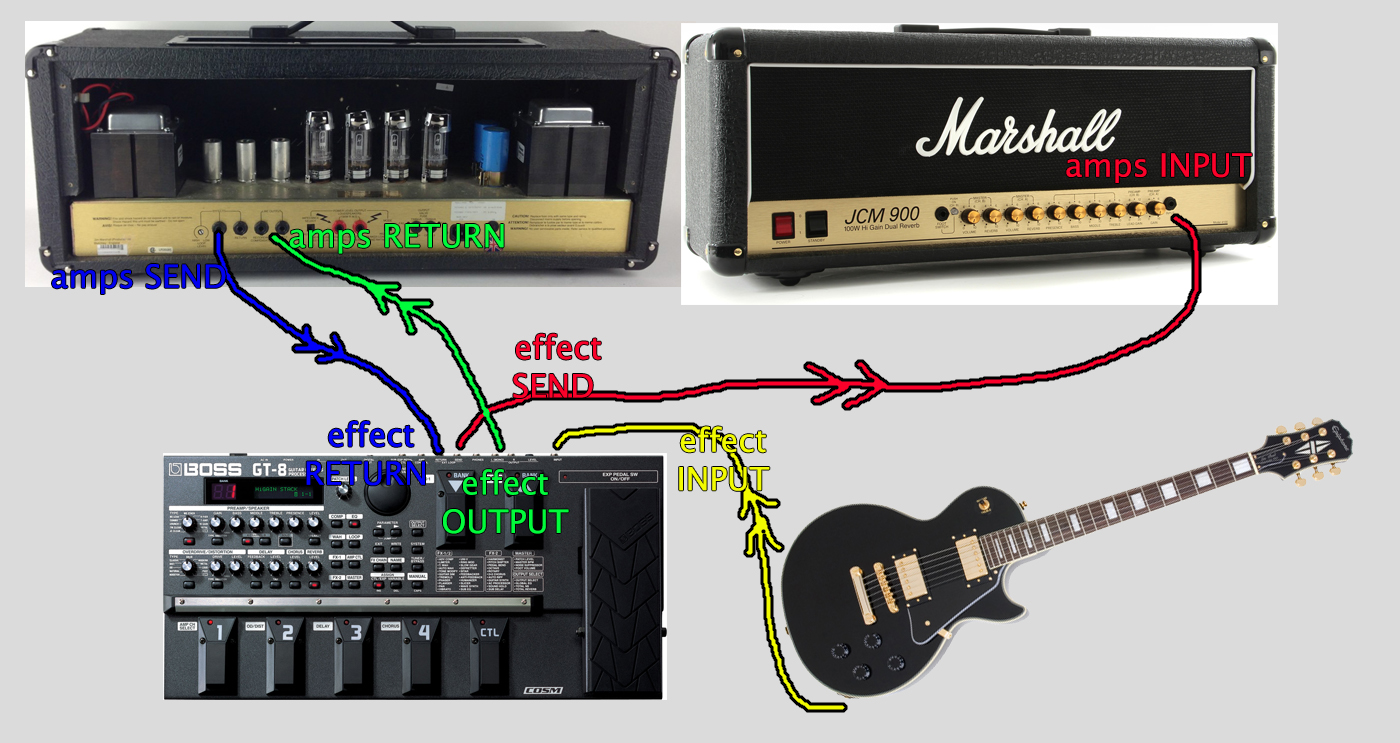
    2. you can plug your “digieffect guitar SEND” into “Amps INPUT” and “amps SEND” into “digieffect guitar RETURN” next the “digieffect guitar OUTPUT” into “amps RETURN” (plug your guitar into “effect INPUT”)

    "digieffect guitar SEND" into "Amps INPUT" -- "amps SEND" into "digieffect guitar RETURN" -- "digieffect guitar OUTPUT" into "amps RETURN" -- plug your guitar into "effect INPUT"
    “digieffect guitar SEND” into “Amps INPUT” — “amps SEND” into “digieffect guitar RETURN” — “digieffect guitar OUTPUT” into “amps RETURN” — plug your guitar into “effect INPUT”


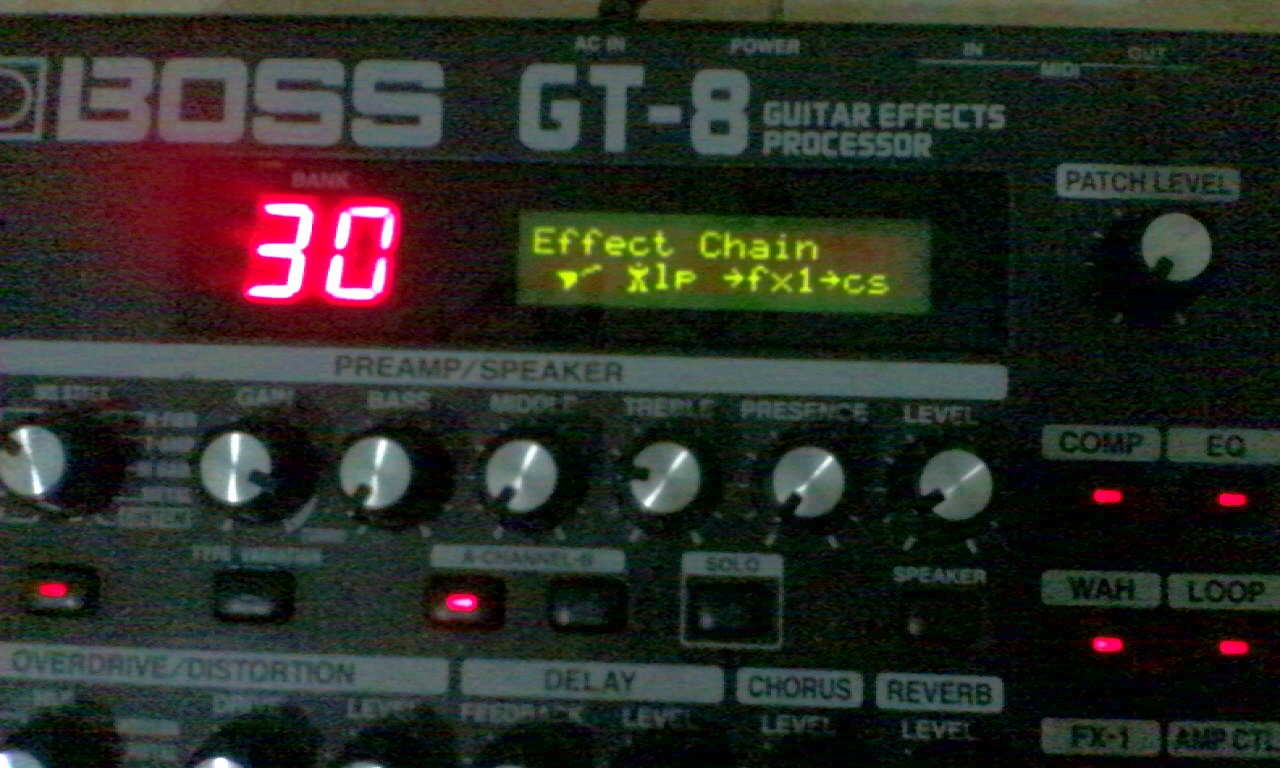
    then set the effects sequence on your digieffect and make the “EXTERNAL LOOP” as the first in chain sequence.

    boss gt-8 effects chain external loop

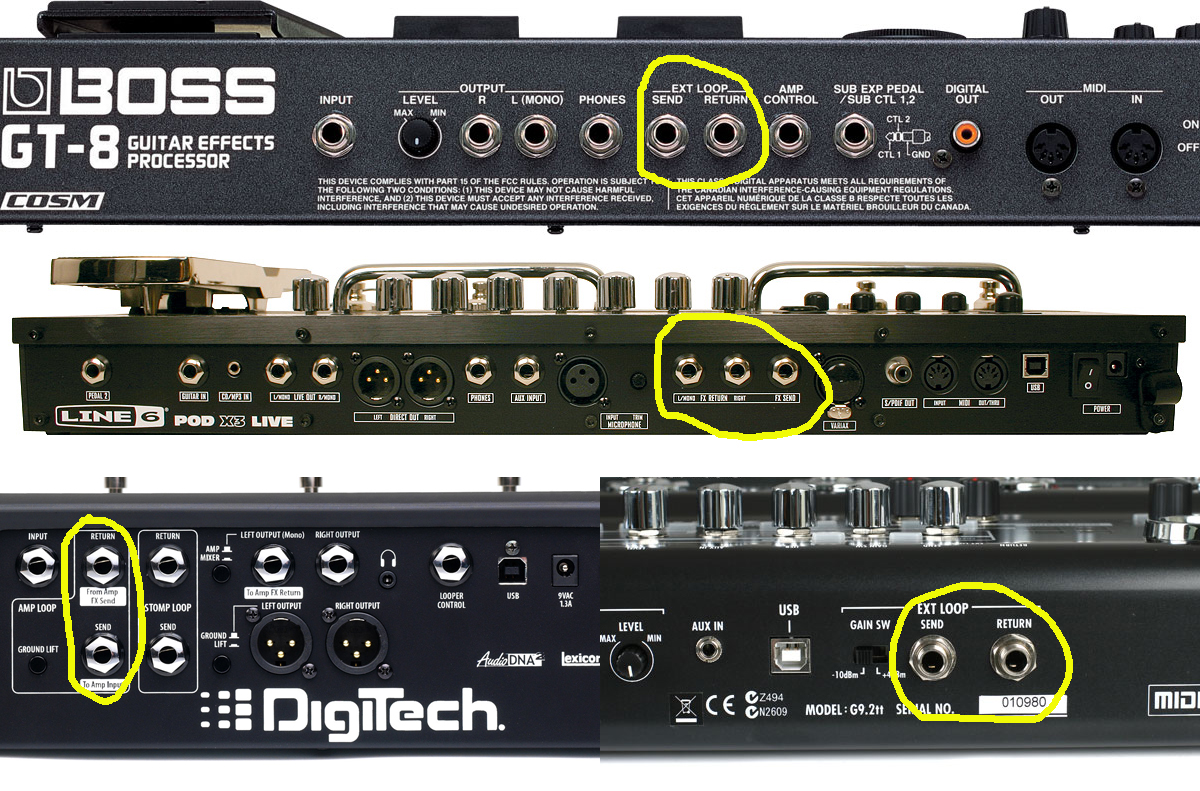
    here I’m using BOSS GT-8, I’m sure you can find this on other kind of digieffects rear panel such as POD X3 Live, DigiTech RP1000 or ZOOM G9.2tt

    multieffects rear panelBy doing this, you are disabling the preamp modelling and using stage Amps as your first sequence in effects chain.

    please pay attention to the two above, because those two methods affect your guitar sound in general.  they eliminate the robotic sound factor which is the preamp modelling is the cause of it.

    now your default clean sound is your stage Amps sound, you can bypass the digieffect and find out that your bypass sound is still your stage Amps sound. Again, leave the Digital Effect Processors Equalizer in flat setting. I recommend you to set the equalizer for final touch of your rig setting. all I’m saying is if you set the clean sounds and distorted sounds in balanced/flat equalizer, you will consider more about balancing the volume and gain between each setting. by doing that, all your settings, include clean sound and distorted sound will easily be modified in  one equalizer(the amps equalizer). This process is useful in understanding the guitar sound enhancements knowledge.

    FYI: this may not work for some other digital effects processors because the lack of External Loop features on them. unless you have made your own good observations, ask the shop guy to demonstrate the features of anything you wanna buy from the music store. if you don’t, you might end up in regret.


    next thing is easy. what you do after that above is setting the stompbox modeller which all depend on your taste. you can set them in patch mode or manual mode. try them both to get the efficiency in performing live. make sure you put the overdrive/distortion(fuzz, dist, crunch, etc.) before modulation/ambience(chorus, delay, reverb, etc.) to get optimal tonality especially in tone precision and clarity. I’ll write about it for next posts.  Have a good day, guitar learners! 🙂